Saltash
OS Grid Ref:-SX424579
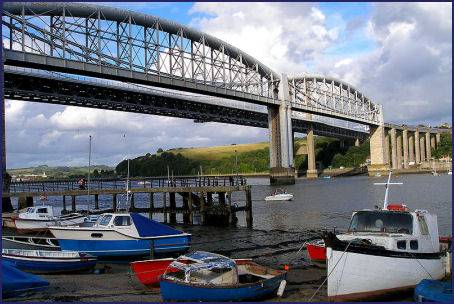 The historic town of Saltash, famous for Brunnel's impressive Royal Albert Bridge stands by Cornwall's border with Devon and is popularly known as the 'Gateway to Cornwall'..
The Royal Albert Bridge was opened by Queen Victoria's consort, Prince Albert, on 2nd May, 1859 and was designed by the Victorian engineering genius, Isambard Kingdom Brunnel. It carries the railway line across the broad River Tamar. Alongside stands the Tamar Bridge, a toll bridge, which takes traffic across the river.
Known in Cornish as Essa, Saltash developed around the river crossing of the Tamar which has been in operation since as early as the Roman era. The town served as a port and safe harbour well before the nearby port of Plymouth developed. The history of Saltash before 1066 is obscure but following the Norman conquest Trematon Castle, on the southwest outskirts of the town, was constructed, probably by Robert Count of Mortain, .the half-brother of William the Conqueror.
The waterside at Saltash is a Conservation Area and a popular location for watersports and fishing. It is also home to a colony of mute swans, known as the Saltash Swans, they are resident throughout the year.
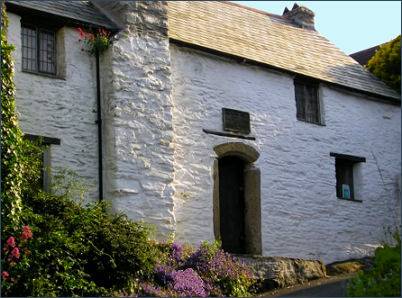 Mary Newman's Cottage (right) is managed by the Tamar Protection Society and is the oldest building in Saltash, dating from around 1480. The cottage is furnished with period furniture which, along with utensils on display give the interior a truly atmospheric feel. Visitors can wear period clothing and play Elizabethan games during their visit. The garden is laid out in authentic Elizabethan style, showcasing the plants and herbs which were vital to a household of the period. Light refreshment may be taken in the garden whilst relaxing and enjoying the view of the Tamar below.
The church St Nicholas and St Faith was founded in Norman times, the church still retains many Norman features which include its tower, and the south door. the font is also understood to be Norman. The church was restored in 1869. The main church in Saltash is however, St Stephens by Saltash, which lies about a mile from the centre of the town. Other places of interest include the Guildhall, with its granite Tuscan columns, which dates back to the eighteenth century and the cottage of Mary Newman, the first wife of Elizabethan seafarer Sir Francis Drake. Saltash Museum and Local History Centre contains a display covering the history of Saltash. Nearby Antony House overlooks the Lynher estuary and is reputed to be the finest Queen Anne buildings in the West Country.
A Town Heritage Trail is available, which covers much of Saltash' history, the Tourist Information Centre, located at The Guildhall provides information on the trail. On the edge of the town lies a sizeable nature reserve, Churchtown Farm Community Nature Reserve, which is bordered by the Tamar and Lynher rivers, the reserve extends to 150 acres and lies within the Tamar Valley Area of Outstanding Natural Beauty.
Image 1 copyright Tinminer
St. Stephen by Saltash Church
St Stephens by Saltash, the original parish church of Saltash, lies around a mile from the town centre. Much of the building's fabric is fifteenth century, the font, however, dates back to the Norman era and there are some Norman remains in the tower. The church was most likely founded by the Norman Lord of Trematon Castle, it later passed into the possession of the Dukes of Cornwall.
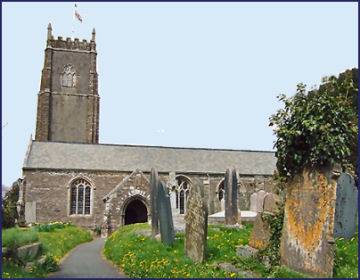
St. Stephen's church is built in a Perpendicular style and comprises of a chancel, nave, north and south aisles, and a vestry. The south arcade has five impressive four-centred arches, while the north has four; the pillars are composed of Cornish granite. The battlemented tower is reputed to be a hundred feet high and has three stages. The belfry contains six bells, which were cast in 1760.